
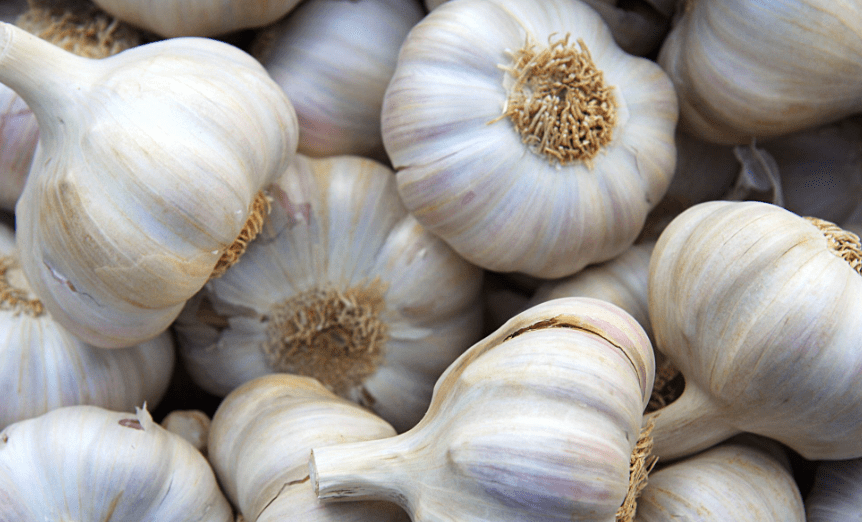
The Truth About Dogs and Garlic
Admin2025-09-08T18:09:46+00:00Popular myth: dogs can’t eat garlic. In reality, dogs can benefit from adding this superfood to their diet! Read on below for some of the main benefits of garlic for your furry friend.
Garlic gets a bad rep with dogs – unnecessarily.
Garlic has long been known in ancient cultures for its benefits for health. It is high in inulin, amino acids, sulphur, zinc, potassium and phosphorus. It also contains vitamin A, C, calcium, magnesium, manganese, selenium, germanium and B-complex vitamins!
Garlic gets a bad rep and often gets mixed up in the same conversation as onions, which are super toxic for dogs and should never be fed. Part of the reason for this is that a study done in 2000 fed dogs 5 grams of garlic per kilo of body weight. This is a huge amount of garlic – way more than your dog should be ingesting. This study showed negative effects on the dogs, which makes sense when you realize how much was being fed. Another issue – some studies feed dogs garlic extract, which is significantly more concentrated and more potent than fresh garlic. Humans don’t take garlic extract in the same amounts as we eat, so why on earth would dogs? Naturally, dogs did not react well to this amount of concentrated garlic.
However, other studies have fed smaller doses of garlic to dogs over a longer time period and found numerous health benefits as a result. The conclusion? Garlic can be great for your dog’s health. The trick, with all foods, is to get the dosage amount right and to feed in the correct way.
Some of the benefits for dogs include:
1. It prevents blood clots and improves blood flow.
Garlic acts as a vasodilator (it helps to widen red blood cells so they take in more oxygen). This helps improve blood flow to your dog’s system and can help with the prevention of blood clots.
2. It prevents tumors from forming.
It can help you in your battle against fleas and ticks.
Garlic in your dog’s system is repulsive to fleas and ticks and makes them unattractive as a host. However, it takes a few weeks to build up in your dog’s system so you need to feed it for a few weeks before you start to see a difference. It is a much safer alternative to chemical repellants.
3. It decreases the build-up of cholesterol.
Garlic is antifungal, antibacterial, and antiparisitic.
Garlic can help rid parasites and bad bacteria from your dog’s digestive tract, and also boosts the immune system to help fight off diseases and illness. There’s a reason garlic is also recommended as a home remedy for humans during cold and flu season too!
4. Garlic can help fight cancer.
Garlic is great at enhancing natural immunity, which helps destroy bad bacteria and diseased cells in the body. Clinical trials are even studying the anti-cancer effects of garlic!
How to Feed Garlic
Now for the most important part. If you feed garlic, it should always be fresh, raw garlic only. Raw garlic contains an enzyme called alliinase. When raw garlic is crushed or chopped, alliinase combines with an amino acid derivative to create allicin. Allicin is the active ingredient in garlic that gives it those antibiotic, anti-cancer, antiviral and antioxidant properties. Garlic extracts often don’t contain allicin, and the pre-chopped, jarred garlic often contains other ingredients and preservatives that are not safe for your dog.
Peel the garlic cloves, chop it up, and let it sit for a few minutes to give the compounds time to work before you add it to your dog’s food bowl.
Dosage (per day) based on your dog’s weight:
- 5lbs: 1/6 tsp
- 10lbs: 1/3tsp
- 15 lbs: 1/2 tsp
- 20lbs: 2/3 tsp
- 30 lbs: 1 tsp
Don’t give garlic to pregnant dogs or puppies. If your dog is on medication, check with a vet first as garlic can interact with some medications. Finally, some breeds such as Shiba Inus and Akitas have been found to be overly sensitive to garlic, so I would avoid for them, or give very very small amounts.





Leave a Reply
You must be logged in to post a comment.